Feel What Sound Can Do
Sound is vibration. It moves through the air, enters through the auditory system and can be experienced throughout the body.
You don’t just hear it. You feel it.
Your body is made up of about 60–70% water, and sound travels more than four times faster through water than through air. As sound vibrations move through the body, they can be felt through your tissues, bones and throughout the body—creating a full-body experience that goes far beyond simply hearing sound.
That is part of what makes an immersive sound experience so different from simply listening to music.
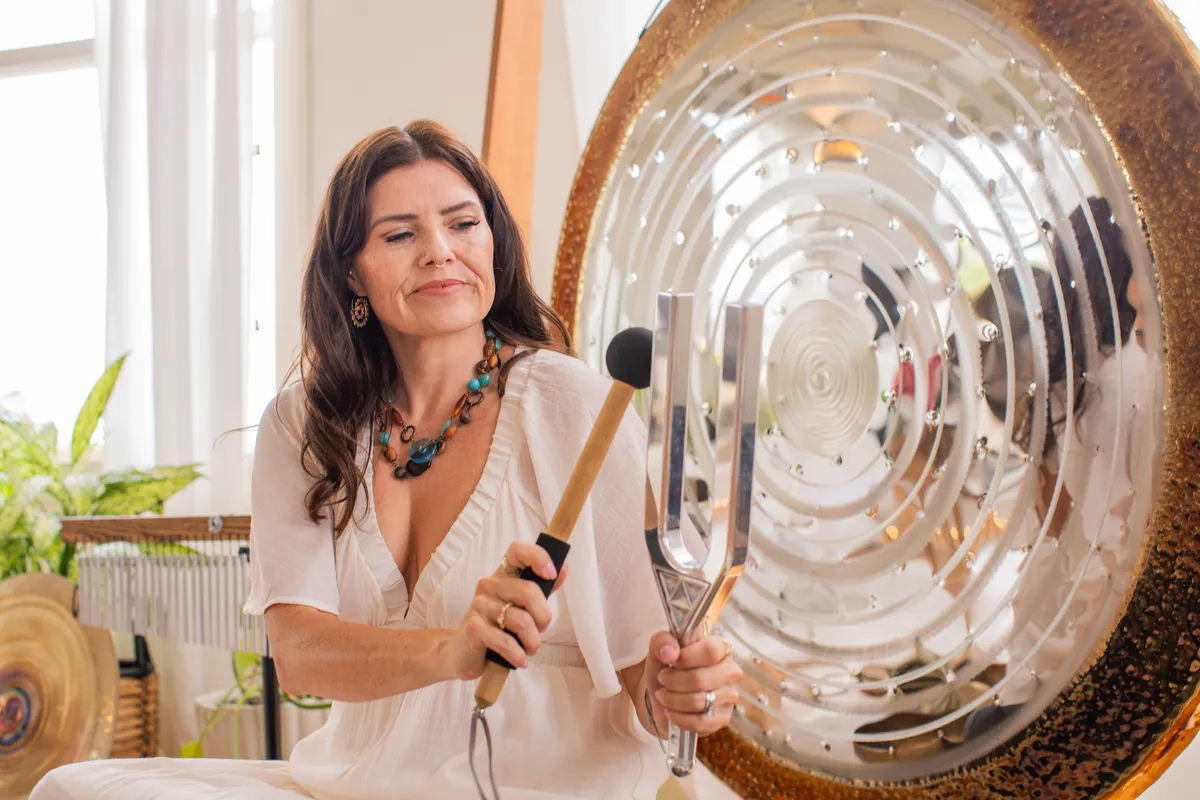
Resonance & Entrainment
Sound Is Vibration
Every singing bowl, gong, drum, chime and tuning fork produces vibrations at different frequencies.
Those vibrations travel as sound waves through the air and enter the auditory system, where they are transformed into neural signals and interpreted by the brain. Different qualities of sound—including pitch, rhythm, harmony, intensity and timbre—engage the brain in different ways.
When instruments are played together intentionally, individual sounds become layers of vibration, rhythm and frequency, creating an immersive experience for both the mind and body.
This is also where the concepts of resonance and entrainment become important.
Resonance describes what happens when vibration from one source causes another object or system to respond.
Entrainment describes the tendency of interacting rhythms or oscillating systems to influence or synchronize with one another. We see examples of rhythmic synchronization throughout nature and within the human body.
During an immersive sound experience, repetitive rhythms, sustained tones and intentional patterns of sound can influence attention, breathing and arousal. Different instruments can create different effects depending on their frequency, rhythm, harmonics, intensity and how they are played.
Rather than one frequency simply “taking over” the body, sound creates an environment of interacting rhythms and vibrations that the brain and body continually respond to.
Your Brain Responds to What It Hears
The brain is constantly processing sound.
Different regions respond to qualities such as pitch, rhythm, melody, frequency and intensity.
Repetitive rhythms, sustained tones, chanting and intentional sequences of sound can influence attention and arousal, helping explain why certain sounds can feel stimulating while others invite the mind and body toward stillness.
Sound and music can also influence patterns of brain activity. Slower brainwave states, including alpha and theta activity, are associated with relaxation, inward attention and meditative states.
Our internal rhythms can also shift during deep relaxation. Breathing may naturally become slower and more rhythmic, muscle tension may decrease and attention may turn inward.
This is part of what can make sound such a powerful doorway into meditation, particularly for people who find it difficult to simply sit still and quiet their thoughts.

The Nervous System
From Stimulation to Regulation
Most of us move through our days surrounded by stimulation: screens, conversations, notifications, decisions, responsibilities and constant mental activity.
An immersive sound experience changes the sensory environment.
As your attention shifts toward sustained tones, rhythm and vibration, there is an opportunity to step away from constant external demands and settle into a quieter state.
This shift is especially important for the nervous system.
The nervous system plays a central role in regulating functions throughout the body, including heart rate, breathing, digestion and many aspects of immune function. When we are continually stressed or overstimulated, the body may remain in a heightened state of activation.
Sound can create an environment that supports the transition toward relaxation and parasympathetic activity—the state commonly associated with rest and digest.
Rather than saying that sound itself “heals” every system of the body, we can think of sound as helping create conditions that support the body’s natural processes of regulation, recovery and restoration.
This is why people often describe leaving a sound experience feeling calmer, lighter, clearer, grounded or deeply rested.
What You May Experience
Sound-based practices have been associated with a range of physical, mental and emotional benefits, while every person’s experience is different.
People often turn to sound to support:
Pain relief
Deep relaxation
Reduced stress and tension
Reduced anxiety
Improved mood and a more positive outlook
Easier access to meditative states
Rest and restoration
Greater mental clarity
Increased feelings of energy and wellbeing
A deeper sense of connection and presence
Some people describe sound as a deeply visceral experience. Others experience imagery, emotional shifts, altered perception of time, a sense of expansion or even an out-of-body-like experience during very deep states of relaxation or meditation.
There is no single experience you are supposed to have.
Some people also report changes in physical discomfort or pain following sound-based experiences. Sound therapy is a complementary wellness practice and is not intended to replace appropriate medical care.
Understanding Brainwaves & Frequency
Different patterns of brain activity are associated with different states of consciousness. Sound, rhythm, chanting and music can influence neural activity and brainwave states. This is one reason you may experience a noticeable shift in your mental state during an immersive sound session.
Beta is commonly associated with active thinking and alertness.
Alpha is associated with relaxed wakefulness.
Theta is associated with deep relaxation, meditation, creativity and the transition toward sleep.
Delta is most strongly associated with deep sleep.
Some sound practices also incorporate binaural beats, in which slightly different frequencies are presented to each ear. The brain perceives the difference between those frequencies as an additional rhythmic beat. Binaural beats may support meditation, focus, sleep and relaxation.

Sound, Reiki & Intention
The Energetic Side of Sound
For Kelly, sound has always been about more than what happens through the ears.
Some approaches to integrative wellness describe the body as having a biofield, or field of energy associated with and surrounding the body. Within this framework, sound and vibration are believed to interact not only with the physical body, but the body’s energetic state affecting us mentally, emotionally, and spiritually as well.
Energetic traditions invite us to explore the possibility that vibration, intention and consciousness influence how we experience ourselves and the world around us.
Kelly’s work brings these dimensions together through sound, vibration, Reiki and intention, allowing each person to experience the work in their own way.
An Ancient Practice Through a Modern Lens
The use of sound for healing, ceremony, meditation and connection extends across cultures and centuries.
Singing bowls, chanting, drums, bells and other forms of intentional sound have long been incorporated into traditions around the world. Tibetan and Himalayan singing bowls are among the instruments most closely associated with modern sound healing, alongside practices involving voice, percussion and other forms of vibration.
Today, sound is also being explored through neuroscience, psychology, physiology and integrative health, giving us new ways to understand an experience humans have intuitively turned toward for generations.
The language may have changed. Our relationship with sound hasn’t.
You Don’t Have to Understand It to Experience It
You can understand frequencies, brainwaves, resonance and nervous-system regulation.
Or you can simply lie down and listen.
There is nothing you need to learn, perform or achieve during a Kelly Rose Wellness experience. The instruments, sound and vibration create the environment.
Your only job is to experience what happens for you.